
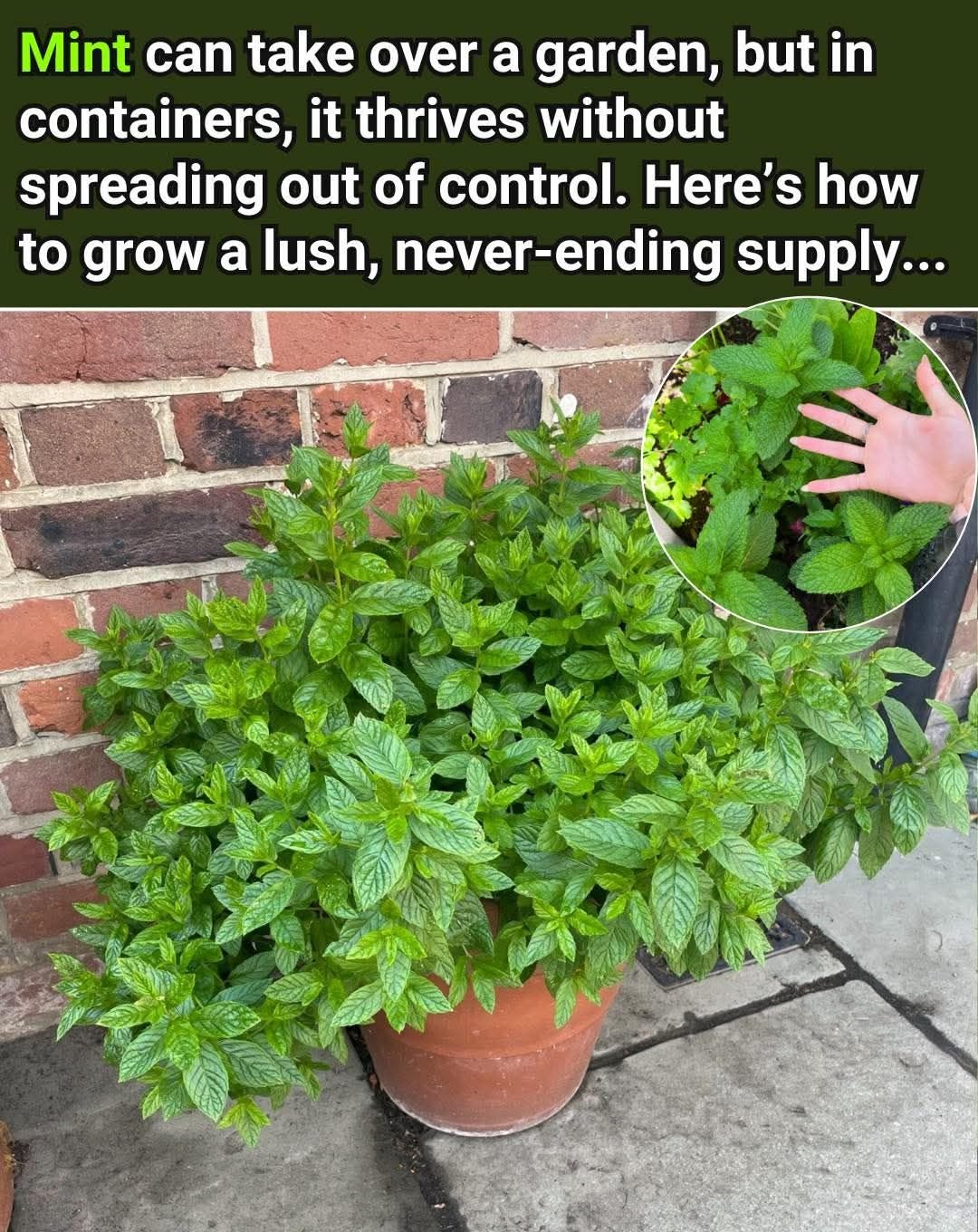
Mint is not a fussy plant, but the size and type of container make a big difference in how vigorously it grows.
A pot that is at least 10–12 inches deep and wide gives the roots space to spread. Larger pots will allow the plant to grow bushier and produce more leaves.
The material also matters. Terracotta pots are breathable and prevent waterlogging, but they dry out faster.
Plastic or resin containers retain moisture longer, making them easier to maintain in hot climates. Fabric grow bags are another excellent option, as they provide superb drainage and root aeration.
Whatever you choose, drainage holes are essential, because mint does not tolerate standing water around its roots.
Soil Preparation
Healthy mint starts with the right soil. Garden soil is often too heavy for containers, so use a light, well-draining potting mix.
For the best results, combine potting soil with compost to provide nutrients and add perlite or coarse sand to improve drainage. Mint prefers soil that is slightly acidic to neutral, with a pH between 6.0 and 7.0.
Refreshing the top layer of soil with compost each spring helps replenish nutrients and keeps your mint vigorous year after year.
Planting Mint
You can start mint from seeds, but it’s much faster and easier to grow from cuttings or nursery plants.
Seeds take time to germinate and don’t always produce plants identical to the parent.
With cuttings, you’ll have a strong plant ready to thrive in your container within weeks.
Simply snip a 4–6 inch piece of stem, place it in water until roots form, and then transfer it to your potting mix.
Nursery plants are even easier – just loosen the roots before planting them at the same depth they were growing previously. Mint establishes quickly and will begin sending out new shoots in no time.
Watering and Feeding
Mint loves moisture, and container soil dries out faster than ground soil, so consistent watering is key.
Check your pots daily in summer and water whenever the top inch of soil feels dry. The goal is to keep the soil evenly moist but never soggy, as overly wet conditions can lead to root rot.
Adding mulch, such as shredded leaves or straw, on top of the soil helps lock in moisture.
Mint is not a heavy feeder, but it benefits from regular nourishment. A balanced liquid fertilizer applied every three to four weeks during the growing season keeps it lush and green.
Organic options like compost tea or diluted fish emulsion are excellent choices. Avoid overfertilizing, as too much nitrogen can lead to leafy growth with reduced flavor.
Pruning and Harvesting
Regular pruning is the secret to growing tons of mint in containers. If left uncut, mint becomes leggy, woody, and less flavorful.
Pinch off new tips often to encourage branching and bushy growth. Every few weeks, trim back one-third of the plant to keep it vigorous.
Harvesting should start once your mint reaches about six inches tall. Always snip stems just above a leaf node to stimulate regrowth. The more you harvest, the more mint you’ll get.
For the most aromatic leaves, harvest in the morning when the essential oils are strongest. If you notice flower buds forming, remove them immediately – once mint flowers, the leaves lose much of their potency.
Propagating for More Plants
For Complete Cooking STEPS Please Head On Over To Next Page Or Open button (>) and don’t forget to SHARE with your Facebook friends.
